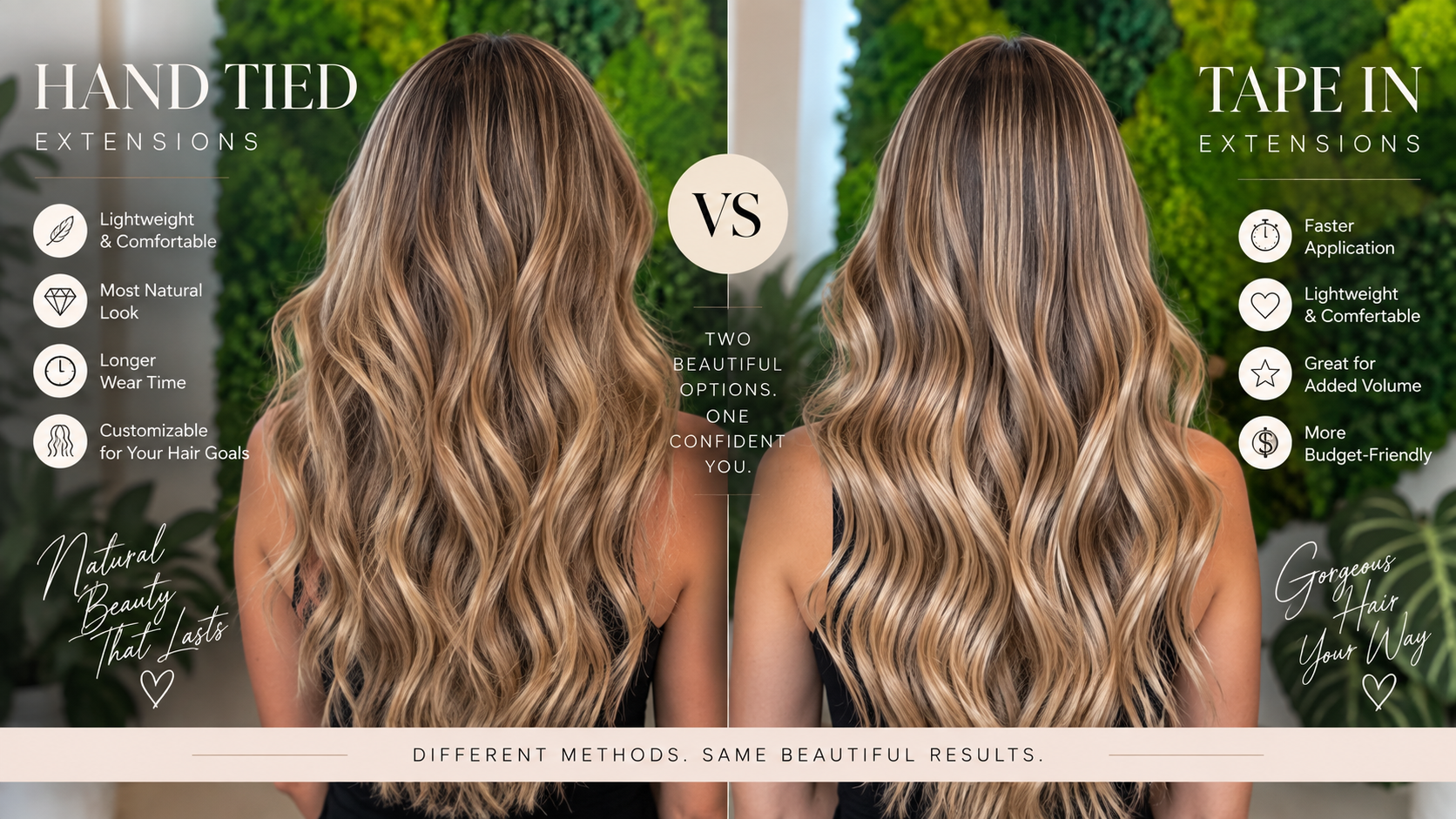
Same goal, two different methods. Hand-tied and tape-in extensions both give you length and fullness, and both look completely natural when they are placed correctly. The difference is in how they attach, how they sit on your head, and what your next twelve months look like.
Here is how we actually decide between them in a consultation.
Tape-in extensions
Tape-ins are thin wefts sandwiched around small sections of your own hair with a medical-grade adhesive. They lie flat, they go in fast, and they are gentle.
They tend to be right when:
- This is your first set and you are not sure you want to commit to extensions long term
- Your hair is fine and you need the attachment to sit as flat as possible
- You wear your hair down most of the time
- You want the quickest appointment and the easiest removal
Tape-ins are the most common first set we place, and that is deliberate. They are the lowest-commitment way to find out whether you actually like living with extensions before you build a bigger investment around them. Removal is straightforward, and nothing about the method makes the next decision harder.
Hand-tied extensions
Hand-tied wefts are sewn onto a row of beads anchored in your own hair. No adhesive. The weft itself is featherlight, and because it is a continuous row rather than individual pieces, it moves as one.
They tend to be right when:
- You want significant thickness rather than mostly length
- You have enough density to hide and support a row
- You wear your hair up, in a ponytail, or pulled back regularly
- You are past the trial stage and know extensions are part of your routine
The movement is the thing people notice. A hand-tied row swings differently than individual pieces do, and for anyone chasing volume rather than length, it is usually the better answer.
The honest comparison
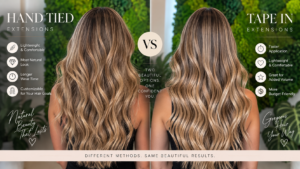
| Tape-in | Hand-tied | |
|---|---|---|
| Attachment | Adhesive weft, no beads | Weft sewn to a beaded row |
| Best for | Fine hair, first sets, length | Density, volume, updos |
| Appointment length | Shorter | Longer |
| Flatness at the scalp | Flattest option | Slight row, well hidden |
| Move-ups | Every 6 to 10 weeks | Every 6 to 10 weeks |
Both methods run on the same maintenance rhythm. You come in for move-ups every 6 to 10 weeks as your natural hair grows out and the attachment point drifts away from your scalp. That is not a method difference, that is just how extensions work.
With proper care, the hair itself lasts several months to a year. The hair is reused at each move-up. You are not rebuying a full set every appointment, which is the part that surprises people about the long-term cost.
Will either one damage my hair?
Applied and maintained correctly, no.
The damage stories you have heard almost always trace back to one of three things: a set placed too heavy for the hair supporting it, move-ups pushed far past schedule, or removal done at home. Our extension artists are method-certified and place every set for comfort and hair health, and the move-up schedule exists specifically to protect your natural hair.
The other half of the answer is that we will tell you if extensions are not right for you. If your hair cannot support the set you are asking for, saying so in the consultation is a much better outcome than finding out four months in.
What about V-Light?
There is a third method, and for very fine hair it is often the correct answer over either of these two. V-Light uses a tiny transparent attachment bonded with UV light, so there is no bead and no tape to hide at all. If you have been told your hair is too fine for extensions, that is the one to ask about.
How the decision actually gets made
Not from a blog post. Every set at Sanctuary starts with a consultation and a color match, and the method gets matched to your hair type, your density and your lifestyle in the room.
Lifestyle carries more weight than people expect. Someone who wears a ponytail to the gym five days a week and someone who wears their hair down every day of their life are two different recommendations, even with identical hair.
Pricing works the same way. It varies with method, length and how much hair you need, and you get a clear quote at your consultation before anything is booked.
Frequently asked questions
Tape-in usually sits flatter on fine hair. For very fine or thinning hair, V-Light is often the better recommendation than either.
Move-ups every 6 to 10 weeks for both methods, as your natural hair grows.
Several months to a year with proper care. The hair is reused at each move-up.
Yes with both, though hand-tied rows are generally the stronger choice if you wear your hair up regularly.
It varies with method, length and how much hair you need. You get a clear quote at your consultation before anything is booked.
Yes. Every set starts with a consultation and a color match so the extensions blend seamlessly.
Book your consultation
The consultation is where this actually gets decided, and it is the right first step whichever method you think you want.
Book an extension consultation, or read more about hand-tied, tape-in and extensions at Sanctuary.
Miranda Ferguson is a Master Stylist at Sanctuary Salon & Spa in Cornelius, NC.