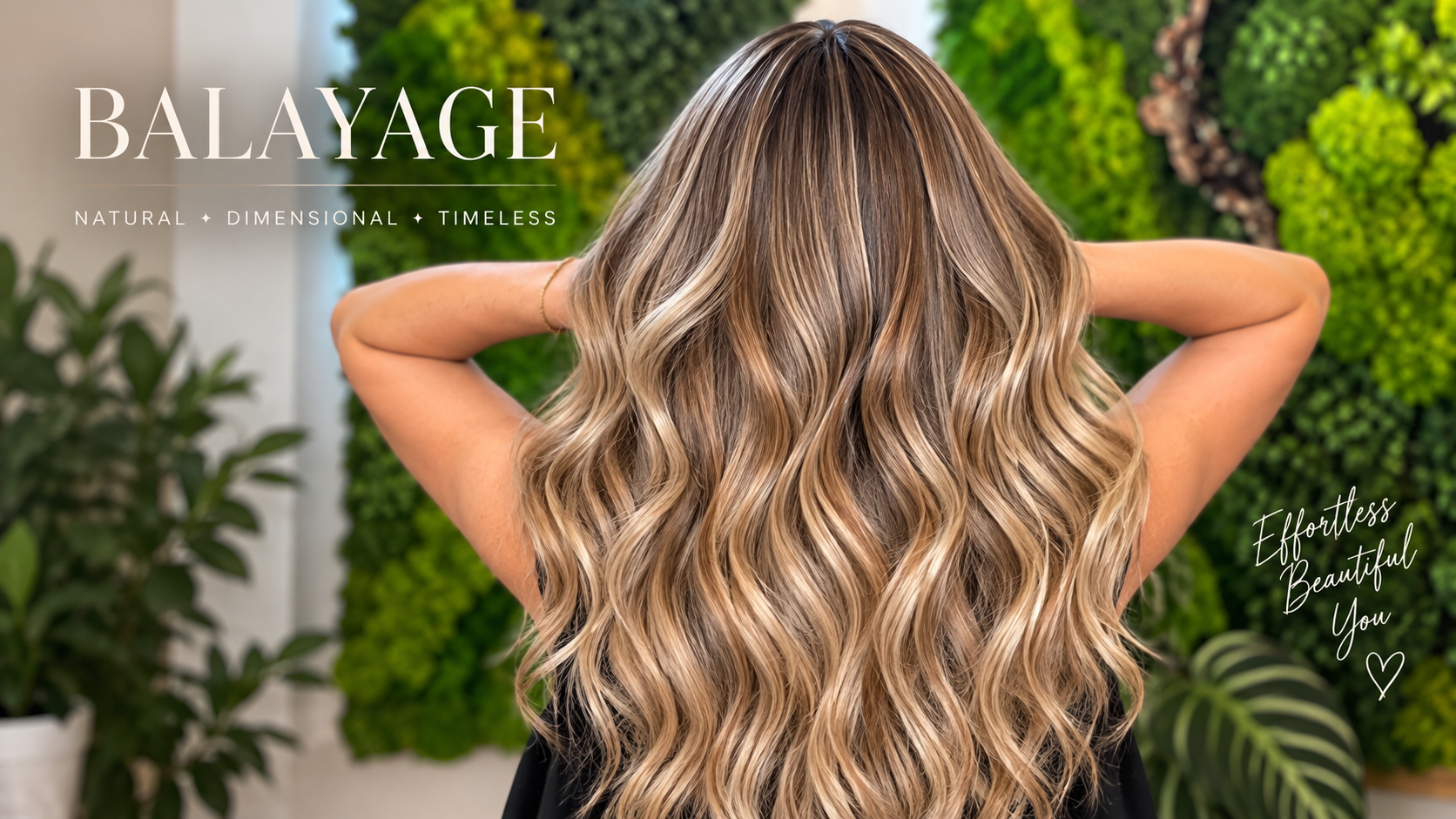
Balayage is supposed to grow out beautifully. That is the whole reason to choose it over a foil line you have to chase every four weeks. But “grows out well” is not the same as “takes care of itself,” and the gap between a balayage that still looks expensive at month four and one that went brassy at week six is almost entirely what happens at home.
Five habits do most of the work. Two products are worth the money. Everything else is noise.
1. Wash less than you think you should
This is the one nobody wants to hear and the one that matters most.
Every wash pulls a little tone. Not damage, tone. The soft creamy finish you left with is a toner sitting on top of lightened hair, and water plus surfactant lifts it a little at a time. Wash daily and you will watch it go warm in a month. Stretch to two or three washes a week and the same color reads fresh twice as long.
If you train at a real intensity or your scalp genuinely needs it, wash. Do not let a rule about color make your scalp miserable. But most people wash out of habit, not need.
2. Turn the water down
Hot water opens the cuticle, and an open cuticle lets tone out. This costs you nothing and it is the easiest change on this list.
Wash warm if you like. Rinse cool. That final thirty seconds of cooler water closes things down and it shows up in how the color holds.
3. Protect it from the sun and the pool
Lake Norman summers do real damage to blonde. Sun oxidizes lightened hair and turns it brassy, and chlorine plus any copper in the water can push it green. This is not a myth, it is chemistry, and blondes on the lake see it every year.
Before you swim, wet your hair with clean tap water and work a conditioner through it. Hair that is already saturated absorbs far less pool water. A hat on the boat does more for your color than any product you can buy after the fact.
4. Use heat, but use it with a barrier
Nobody is asking you to give up your hot tools. Just do not put 400 degrees directly onto lightened hair with nothing between.
Heat protectant, every time, and turn the iron down. Lightened hair does not need the temperature that virgin hair needs. Most people run their tools far hotter than the result requires, and the cost comes out of the ends first, which is exactly where balayage is lightest and most fragile.
5. Book the gloss, not the whole service
The single most useful thing you can do between appointments is a toner or gloss refresh.
Your toner is included in your specialty blonding service, but it is not permanent, and it fades before your lightening needs redoing. A gloss on its own is quicker and cheaper than a full blonding appointment, and it resets the tone back to where you left.
Clients who book a gloss between full appointments stretch their blonding out noticeably further. It is the least expensive appointment on the color menu and the one that protects the most expensive one.
The two products worth spending on
A sulfate-free shampoo that is actually made for color. Not the one that says “for color-treated hair” on a drugstore shelf while a harsh surfactant sits third on the ingredient list. The one your stylist hands you. We build on L’ANZA healing color and care because clean, wellness-grade formulas protect the integrity of the hair and not just how it looks on the day, and the home care is the same logic continued.
A leave-in or bond treatment for the ends. Balayage puts the lightest, most processed hair at the bottom, where it also gets the most friction from clothing and the most heat from styling. Feeding the ends is not vanity, it is the difference between growing out and snapping off.
That is it. Two products. A purple shampoo is a maybe, not a must, and used too often it will leave you dull and faintly violet rather than bright. Ask your colorist whether yours needs one before you buy it.
What is not worth your money
Anything promising to “seal” color permanently. Anything that claims to deposit and brighten at the same time. And most box glosses, which land somewhere you did not ask for and make your next appointment longer and more expensive.
Frequently asked questions
Two to three times a week holds tone noticeably better than daily washing. Adjust for your scalp and your workouts rather than following a rule that makes you uncomfortable.
Usually a combination of toner fading, hot water and sun. It is tone, not damage, and a gloss appointment resets it.
Yes. Toner or gloss is included in both partial and full head specialty blonding.
It depends on your lift, your natural level and how you wear it. Balayage is designed for a softer grow-out than a foil line, and a gloss in between extends it further.
Copper in the water is the usual culprit, and chlorine helps it along. Saturating your hair with clean water and conditioner before swimming is the practical fix.
Book your refresh
If your tone has gone warm and your lightening is still fine, you want a gloss, not a full appointment. If it has been a while on both, book the blonding and we will sort the tone at the same time.
Book your color appointment, or see the full hair color pricing. Partial head specialty blonding starts at $134 and full head starts at $154, with toner included in both.
Kat Starnes is a Master Stylist at Sanctuary Salon & Spa in Cornelius, NC.