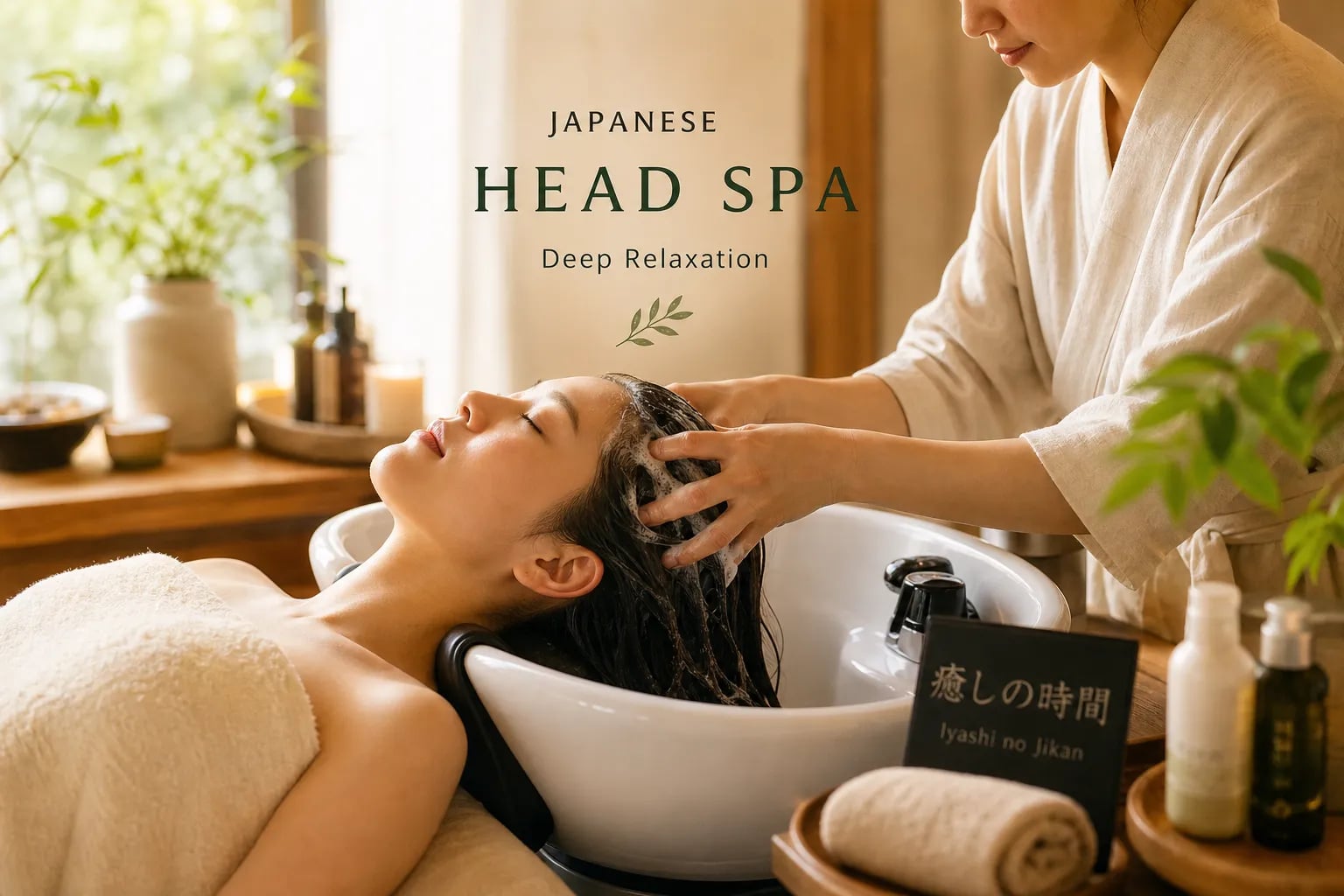
What actually happens during a Japanese head spa ritual? You’ve seen the videos. Someone reclines into a deep shampoo bowl, warm water pours slowly over their scalp, and their face goes completely slack, like every stressful thing from the past six months just quietly excused itself from the room. Many clients report that kind of visible, spontaneous relaxation, and seasoned therapists say it’s one of the most consistent responses they see.
This is a Japanese head spa ritual, and if you’ve been curious about what actually goes on during one of these sessions, this is your full, honest walkthrough. Every stage, in order, with the sensory details nobody bothers to explain before you book. Salons across the country now offer this treatment, and some specialty studios, including Sanctuary Salon & Spa in the Lake Norman area, have developed multi-sensory versions that go well beyond a standard scalp service. But first, here’s the sequence exactly as it unfolds during a professional session.
By the end, you’ll know what to expect, what it feels like on your body, and whether it’s worth every dollar.
What Actually Happens During a Japanese Head Spa Ritual: Step-by-Step
Step 1, How the ritual starts: the scalp consultation
Nothing touches your head yet. The first thing a trained therapist does is examine your scalp before any water or product is introduced. Many professional head spa salons use a scalp scanner or micro-camera to project your scalp onto a screen in real time, showing sebum buildup, dryness patches, clogged follicles, and any areas of inflammation. It’s oddly fascinating and, honestly, a little humbling to see your own scalp magnified to that degree. This analysis takes about five to ten minutes and shapes the entire treatment that follows.
Once the therapist has a clear picture, they confirm your preferences: pressure intensity during the massage, any product sensitivities, and whether there are specific areas of concern like tension at the base of the skull or persistent dryness at the crown. This is the moment to speak up. The entire Japanese scalp treatment is built around your scalp’s actual condition, which means no two sessions are identical. A scalp consultation at the start is widely considered a key distinguishing feature of a professional head spa treatment compared with a routine salon shampoo.
Step 2, The cleanse and scalp exfoliation stage
Now the water starts. The first cleanse is a clarifying pass designed to remove surface debris, product residue, and excess oil. Your therapist works a specialized shampoo through your hair and scalp using their fingertips in slow, deliberate circular movements. The sensation is immediately different from how you wash your own hair at home. The pressure is intentional, the pace is unhurried, and the water temperature is consistently, perfectly warm in a way that your home shower somehow never manages to be.
A second cleanse goes deeper, this time working the product more thoroughly into the scalp tissue rather than the hair. After that, a scalp exfoliation treatment is applied, usually a gentle scrub formula with a soft, gritty texture that’s worked in with fingertip pressure to lift dead skin cells and open clogged follicles. It’s not aggressive, and it doesn’t feel scratchy. What it feels like is thorough in a way that genuinely surprises people. Many clients describe this as the first time their scalp has felt “breathable” in years. This combined cleanse and exfoliation stage runs about ten to twenty minutes total, and by the end your scalp feels different before the main event has even started.
Step 3, The massage phase: where the session becomes genuinely unforgettable
This is the stage responsible for those viral videos, and it earns every second of its reputation. The therapist moves through your scalp using shiatsu-influenced pressure, targeting specific meridian points at the temples, the crown, the occiput at the base of the skull, and along the hairline. The movements alternate between kneading, slow gliding strokes, and sustained pressure holds where the therapist presses into a tension point and simply waits. The first time a deep press lands on a genuinely knotted area, your body exhales before your brain even processes what happened. That involuntary response is not a coincidence.
A full scalp massage ritual at this level activates the parasympathetic nervous system, dropping heart rate, reducing cortisol, and essentially telling your body it’s safe to stop bracing. This stage can run anywhere from fifteen to forty minutes in a full session, and the longer it goes, the heavier your limbs get. That’s not a side effect. That’s the treatment working.
What catches most first-timers off guard is where the massage goes next. A proper Japanese scalp spa treatment doesn’t stop at the hairline. The therapist works down through the neck, into the trapezius muscles, and across the upper back. This is where some clients experience what therapists tactfully call an emotional release: a sudden softening, unexpected tears, or that specific feeling of being so deeply, completely tired that you don’t know what to do about it. Don’t fight it. That’s the body’s stress response decompressing in real time, and it’s exactly what this ritual is designed to do.
Step 4, Steam, serums, and what Sanctuary does differently
After the massage, a warm steam treatment or mist is applied to the scalp. Physiologically, this matters: heat dilates the blood vessels near the follicles, increases local circulation, and softens any remaining buildup so that treatment products can actually penetrate rather than sit on the surface. This is the hydrotherapy scalp massage stage moving into its final act. A targeted serum or mask, chosen based on what the scalp analysis revealed at the start, is applied while the steam is active. The warmth is closer to a heated towel than a sauna, and most clients are essentially asleep by the time it’s done. This stage lasts roughly ten minutes and is where benefits like improved circulation and better product absorption are most concentrated, thanks to the vasodilating effect of the heat.
At Sanctuary Salon & Spa in Cornelius, NC, this stage is designed to go further than a standard head spa experience. The treatment takes place inside a private salt-wall room with active halotherapy running in the background. The ceiling shifts through an aurora borealis projection while a hand-picked flowering tea blooms open in a glass beside you. This isn’t just a Japanese head spa anymore, it’s a full sensory environment designed to pull you completely out of your regular life. The combination of salt therapy, visual ambiance, herbal scent, and aroma head spa elements makes Sanctuary’s version stand out in the Lake Norman region. If you’ve been searching for a head spa near Lake Norman and want a full-spectrum experience rather than a stripped-down interpretation, this is worth a serious look.
Step 5, The finish, the feeling, and what happens when you walk out
The rinse at the end of a professional Japanese head spa often uses a halo or waterfall-style water flow that distributes pressure evenly across the scalp instead of a single directed stream. It feels like standing under very gentle rain, except you’re lying down and completely relaxed. After rinsing, a conditioning treatment is applied, the hair is towel-dried, and a light blow-dry completes the session. The difference in your hair texture is immediately visible, noticeably smoother and softer before a single styling product has touched it. Your scalp feels clean in a way that’s different from your usual routine. The word most clients reach for is “clean”, and then they pause, because they realize they’re not sure their scalp has ever felt quite like this before.
In the first hour after a full session, the most common response is a deep, pleasant fatigue. Not tiredness from a bad night’s sleep. More like the feeling after a long swim in warm water. Some people feel emotionally tender or soft for a few hours, which is normal and temporary. For aftercare, drink water, eat something grounding, and give yourself permission to skip the high-stimulation reentry. Avoid heavy heat styling the same day, standard therapist advice is to let the scalp breathe and give the treatments time to settle. Light stretching, journaling, or simply sitting somewhere quiet are what most therapists recommend for the rest of the afternoon.
So Is It Worth Booking? Here’s What You Should Know
A full Japanese head spa ritual runs roughly sixty to ninety minutes and moves through scalp analysis, deep cleansing, exfoliation, pressure-point massage, steam treatment, and finishing care. Each stage builds on the one before it. Clients commonly report a cleaner-feeling scalp and noticeably reduced tension afterward, and research does support that massage activates the parasympathetic nervous system and that thorough cleansing removes buildup that routine washing leaves behind. Large-scale clinical trials on the complete head spa package are still limited, but the physiological mechanisms behind each individual stage are well-established.
In the U.S., a standard session runs about $75 to $160 depending on market and salon level. In the Charlotte and Lake Norman metro area, most professional treatments fall between $150 and $250 for a sixty-to-ninety-minute experience. Luxury and specialty studios, especially those offering salt therapy, private rooms, and premium products, sit at the higher end of that range and beyond.
Now you know exactly what actually happens during a Japanese head spa ritual, from the first scalp scan to the final rinse. If you’re in the Lake Norman area and want to experience the full version, salt-wall therapy, aurora ceiling, flowering teas, and all, reach out to Sanctuary Salon & Spa in Cornelius to book your session. Book it once. Just once. You’ll understand immediately why people come back with that look on their face.
Frequently Asked Questions About the Japanese Head Spa Ritual
Most full sessions run sixty to ninety minutes. Some express versions are available at around forty-five minutes, but the complete ritual, including consultation, cleanse, exfoliation, massage, and steam, typically needs at least an hour to deliver the full experience.
No. The pressure is firm and intentional, but it should never be painful. Therapists adjust intensity based on your preferences during the consultation at the start. If anything feels uncomfortable during the session, you can ask for lighter pressure at any point.
People with active scalp conditions like open wounds, severe psoriasis flare-ups, or recent scalp procedures should consult a dermatologist before booking. Clients who are pregnant should also discuss any massage service with their healthcare provider first. When in doubt, a quick call to the salon before your appointment will help you determine whether a treatment is appropriate for your current situation.
Many regulars book once or twice a month. For scalp health goals like managing buildup or dryness, monthly sessions are a common starting cadence. Your therapist can recommend a schedule based on what your scalp analysis reveals at your first visit.